
The Most Admired Legal Mind – Dikshat Mehra’s Strategic Lens on the Indian Legal System: Mastering the Complexities of Commerce and Offering Simple Solutions
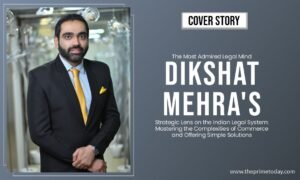
Mumbai’s bustling heart hustles with an accelerated beat of Indian commerce, while its legal landscape sometimes feels like an intricate web of rules and regulations. It matches the city streets map. Yet, for the last fourteen years, Dikshat Mehra has been navigating this high-pressure environment with an upward momentum. From his earliest position as a young associate to his current role as an Associate Partner at Rajani Associates, his journey is inspiring. A professional, he understands that looking at the law as only a set of rules and regulations on a page restricts one’s perception. Rather, if one looks at it as a living tool that can be most effectively used to protect innovation and resolve the most difficult disputes, then that would be the best probable solution to the common misconceptions. In his situations, he might be dealing with a high-stakes arbitration or a sensitive case of white-collar crime. Dikshat Mehra approaches every challenge with a focus on precision and a deep respect for the legal system. In 2026’s concurrent churn, he stands as one of the five most admired legal minds to watch, representing a new generation of leadership in the Indian legal services industry. In his gratitude, he thanks God, seniors, mentors, his parents, his wife, and his extended family for their support and immense contribution to all his achievements.
A Formative Foundation in Legal First Principles
Dikshat Mehra’s academic foundation at the University of Mumbai played a formative role in shaping how he approaches legal reasoning and practice. It instilled a strong grounding in first principles an emphasis on understanding the why behind the law, not just what. That clarity becomes critical for him when dealing with complex, high-stakes disputes where precedents may not always provide straightforward answers. Equally important was the exposure to practical thinking early on. Mumbai, as a commercial hub, naturally influences the legal ecosystem around it. That proximity to real-world disputes financial, corporate, regulatory shaped a mindset in him that law is not just theoretical but deeply intertwined with business and commercial realities.
From Intern to Associate Partner: A Decade of Growth
Within the offices of Rajani Associates, he has spent over a decade building a reputation for being a reliable and insightful advisor. His journey at Rajani Associates began as an intern, which then went on to be defined by a steady progression of responsibility, learning, and exposure to complex, high-stakes matters. He has moved through the ranks of Senior Associate and Principal Associate, proving his capability at every stage of his career. For Dikshat Mehra, the work is about more than just winning a case; it is about providing legal assistance and research that can withstand the highest levels of scrutiny. Over the past decade, a few pivotal experiences have significantly shaped his evolution into an Associate Partner. Early in his career, he was entrusted with matters that required not just legal research but strategic thinking. Handling these cases at a formative stage instilled in him the importance of precision, anticipation of opposing strategies, and the ability to align legal advice with the client’s broader objectives.
Sharpening Advocacy and Substantive Law
A turning point came when he began independently managing litigation portfolios, including appearances before forums such as the High Court and arbitral tribunals. This transition from a supporting role to leading matters sharpened his advocacy skills and deepened his understanding of procedural as well as substantive law. Mentorship and collaboration within the firm have also played a crucial role. Working closely with senior partners not only refined his legal acumen but also shaped his approach to client management, ethics, and professional judgment. He is particularly skilled in arbitration, a field where his ability to simplify complex arguments and find a path toward resolution is most visible. He often finds himself at the center of multi-layered insolvency proceedings, where his background in management and law helps him find balance for all parties involved.
An Integrated Approach to Diverse Legal Domains
He specializes in commercial litigation, arbitration, insolvency, and white-collar crime. Balancing depth across such complex and diverse legal domains is, for him, less about dividing focus and more about developing an integrated approach to complex disputes. While these fields appear distinct, he notes they are often interconnected financial distress can trigger insolvency proceedings, contractual disputes may move into arbitration, and underlying misconduct can evolve into white-collar investigations.
The Fundamentals of Strategy and Calibration
The fundamentals lie in mastering core legal instincts: strategy, evidence, procedure, and timing. Once these are firmly in place, the challenge for Dikshat Mehra becomes one of calibration. Arbitration, for instance, demands precision and efficiency, whereas commercial litigation often calls for persistence and tactical layering. Strict timelines and stakeholder negotiations drive insolvency work, while white-collar matters require a forensic, detail-oriented lens combined with regulatory awareness.
Leveraging Team Synergy and Institutional Knowledge
A key part of sustaining depth is structuring one’s practice thoughtfully. No modern disputes lawyer operates in isolation; leveraging a strong team, collaborating with domain specialists, and building institutional knowledge allows for both breadth and depth. His focus on arbitration and insolvency has been closely tied to India’s legal and economic transformation over the past decade. With the evolution of the Arbitration and Conciliation Act, 1996, and the introduction of the Insolvency and Bankruptcy Code, 2016, the country has made a conscious shift towards faster, more structured, and commercially driven dispute resolution.
Arbitration and the Global Business Ecosystem
Arbitration, to him, represents a modern, globally aligned approach where efficiency, strategy, and precision are paramount. As Indian businesses increasingly engage in cross-border transactions, arbitration has become indispensable, and being part of that ecosystem offered both relevance and challenge. Insolvency, on the other hand, brought a different kind of intensity. The IBC fundamentally changed how financial distress is addressed, placing control in the hands of creditors and imposing strict timelines.
Shaping the Jurisprudence of Tomorrow
It’s a space where law meets finance and business reality, and the outcomes are immediate and far-reaching. What truly motivated this focus for him, however, is the dynamism of these fields. The jurisprudence is still evolving, the regulatory framework continues to be refined, and practitioners have a real opportunity to shape how the law develops.
Clarity of Judgment in High-Stakes Disputes
High-stakes disputes demand more than legal knowledge; they require clarity of judgment under pressure. Dikshat Mehra’s approach to risk assessment begins with stripping the matter down to its essentials: what are the real commercial objectives, where does the evidence truly stand, and how is a court or tribunal likely to view the dispute, not just in law but in equity and practicality. He focuses on identifying the real risks early adverse documents, credibility gaps, jurisdictional hurdles, or enforcement challenges. Clients often come in with a defined narrative; his role is to test that narrative rigorously and map out best-case, worst-case, and most-probable outcomes. This allows the strategy to be grounded in realism rather than optimism.
The Calibration of Legal Strategy
From there, legal strategy becomes a matter of calibration for him. Not every battle needs to be fought aggressively, and not every matter benefits from prolonged litigation. In arbitration, the emphasis for Dikshat Mehra may be on precision and tight case theory; in court, it may involve layered arguments and procedural leverage. In insolvency or white-collar matters, he believes timing and regulatory positioning can be decisive.
Leadership Rooted in People and Principles
Leadership, in a legal practice, is ultimately about building people, not just winning matters. When mentoring junior associates and shaping teams, a few principles consistently guide his approach. First is clarity of thinking. He encourages juniors to go beyond surface-level research and truly understand the structure of a problem what the real issues are, what matters strategically, and what can be left aside. Good lawyering, in his view, begins with clear, disciplined reasoning.
Ownership, Accountability, and Precision
Second is ownership and accountability. From an early stage, Dikshat Mehra tries to give associates responsibility over defined parts of a matter. At the same time, he feels it is important that they know there is support and guidance when needed. Third is precision and standards. Whether it is drafting, research, or court preparation, consistency in quality is non-negotiable for him. Attention to detail is often what differentiates a strong lawyer from an average one, especially in high-stakes disputes.
The Strategic Importance of Commercial Awareness
He also places a strong emphasis on commercial awareness. Law does not operate in isolation, and he encourages associates to understand the business context behind every dispute. It helps
them think more strategically and advise more effectively. Integrating evolving regulatory frameworks particularly in a dynamic space like securities law is less about reacting to change and more about anticipating it.
Anticipating the Regulatory Curve in Securities Law
With regulators such as the Securities and Exchange Board of India continuously refining disclosure norms, enforcement mechanisms, and compliance standards, the key for Dikshat Mehra is to build a strategy that is both legally sound and regulator-aware from the outset. On the litigation side, regulatory awareness becomes a strategic tool for him. Matters involving SEBI often turn on interpretation of circulars, policy intent, and enforcement patterns, not just bare statutory provisions.
Strategic Engagement and Prevention
Understanding how the regulator has acted in similar situations its thresholds, priorities, and evolving stance can significantly shape both defense and offense for Dikshat Mehra. It also informs how and when he chooses to engage with the regulator, whether through responses, settlements, or appellate remedies. In essence, integrating evolving frameworks like SEBI regulations is about staying ahead of the curve aligning legal advice with regulatory intent, anticipating enforcement trends, and ensuring that strategy is as much about prevention as it is about defense.
Fostering Adaptability in an Evolving Landscape
Perhaps most importantly, it fostered adaptability. The legal landscape is constantly evolving, and Dikshat Mehra believes the ability to learn, unlearn, and reinterpret is essential. His academic training provided that foundation one that continues to inform how he analyses problems, structures arguments, and approaches each matter with both rigor and perspective. Over the next five years, he anticipates that arbitration in India is likely to move from being an alternative dispute mechanism to a primary one, particularly for high-value commercial disputes. The shift is already underway, but what he expects to see now is consolidation, institutional maturity, and global integration.
The Decisive Move Toward Institutional Arbitration
First, Dikshat Mehra foresees a decisive move towards institutional arbitration. Historically, India has relied heavily on ad hoc proceedings, often leading to delays and inconsistency. He notes that this is changing; policy and legislative pushes are increasingly favoring structured, rule-based institutional frameworks, aligning India with global best practices. This transition will bring predictability, better case management, and greater confidence among both domestic and international parties. Second, the role of courts is likely to become more restrained and supportive rather than interventionist. While judicial interference has been a long-standing concern, he observes that recent decisions signal a clear shift courts are increasingly referring matters to arbitration, respecting tribunal autonomy, and limiting post-award scrutiny.
Positioning India as a Credible International Hub
Third, India is steadily positioning itself as a credible hub for international arbitration. With consistent legislative amendments and pro-enforcement trends, Dikshat Mehra believes the system is aligning with global standards, particularly in enforcing foreign awards and recognizing party autonomy. As cross-border commerce involving Indian parties grows, this positioning will become even more significant for him. Technology will also play a transformative role. Virtual hearings, digital filings, and data-driven case management accelerated post-pandemic are becoming standard practice, especially in major commercial centers. That said, challenges remain for Dikshat Mehra. Concerns around residual judicial intervention, drafting quality of arbitration clauses, and inconsistent adoption of institutional mechanisms still persist.
The Evolution of Complex White-Collar Crime
The next phase of growth will depend on how effectively these issues are addressed. White-collar crime today is no longer confined to traditional fraud or embezzlement; it has become more technologically enabled, structurally complex, and globally coordinated. What Dikshat Mehra is seeing is not just an increase in volume, but a clear evolution in how these crimes are conceived and executed. One of the most prominent trends is the digitization of fraud. With the rapid adoption of digital banking, fintech platforms, and data-driven systems, cyber-enabled financial crime has surged.
The Surge of Digitized Fraud and Global Coordination
Recent data shows thousands of cyber-fraud incidents across banking systems alone, reflecting how technology has expanded both opportunity and scale for misconduct. At the same time, Dikshat Mehra notices a rise in sophisticated methods such as phishing ecosystems, synthetic identities, and AI-assisted manipulation. A second trend is the blurring of lines between corporate misconduct and criminal liability. Regulators are increasingly focusing on governance failures, ESG disclosures, and even algorithm-driven misstatements.
Interconnecting Financial Distress and Criminal Exposure
Another important shift for him is the increasing interconnectedness of financial distress and criminal exposure. Insolvency proceedings today often uncover fraud, diversion of funds, or preferential transactions, turning what begins as a commercial issue into a white-collar investigation. For Dikshat Mehra, this emphasizes the need for a holistic legal strategy that can address both the commercial and criminal aspects of modern business disputes.
A Rising Star of the Legal Arena
Dikshat’s journey is one of steady growth and recognized excellence. His skills are broad, covering everything from insolvency and bankruptcy to intellectual property and SEBI laws. This versatility has not gone unnoticed. He was honored as a Rising Star by the Governor of Maharashtra and has been named in several prestigious lists, including the BW Legal World 40 Under 40. These accolades are a testament to his ability to manage the intricate layers of civil litigation and commercial disputes with a calm and strategic mind. He holds a Bachelor of Management degree alongside his Bachelor of Laws from Mumbai University, a combination that allows him to understand the business motivations behind every legal conflict he handles.
Recognition as a Signal of Trust and Responsibility
Recognition, such as the BW Legal World 40 Under 40 and Legal Era 40 Under 40, is, for Dikshat Mehra, both affirming and grounding. In a profession where outcomes are often long drawn and the work itself is largely behind the scenes, such acknowledgments serve as a moment for him to pause and reflect on the journey so far. Professionally, he believes these accolades are less about individual validation and more about what they represent they signal trust, consistency, and the ability to deliver in high-stakes, high-pressure environments. They also reflect the quality of matters he has had the opportunity to work on, and the clients and teams that make that work possible. At the same time, they come with a heightened sense of responsibility. Recognition creates an expectation for him not just to maintain standards, but to keep evolving, to take on more complex challenges, and to contribute meaningfully to the profession.
Foundations for the Aspiring Commercial Litigator
To aspiring lawyers who aim to build a career in commercial litigation and arbitration, before giving his advice, Dikshat Mehra would like to say that building a career in commercial litigation and arbitration demands more than technical competence; it requires discipline, patience, and a long-term view of the profession. First, he advises focusing on strong fundamentals. A deep understanding of contracts, civil procedure, evidence, and basic commercial laws is indispensable. For him, these are not subjects you move past they are tools you will rely on throughout your career, especially when matters become complex. Second, he suggests investing early in drafting and research skills. The ability to present a clear, structured argument whether in a pleading, note, or submission is what sets strong lawyers apart. Precision and clarity will always carry more weight than volume in his view.
Practical Exposure and the Patience for Growth
Third, Dikshat Mehra emphasizes developing courtroom and practical exposure. Observing proceedings, assisting in filings, and understanding how matters actually move through courts and tribunals gives context that he believes no textbook can offer. Arbitration, in particular, benefits from lawyers who can combine courtroom instincts with procedural efficiency. Equally important to him is patience and consistency. Commercial disputes are often long-drawn, and growth in litigation is rarely immediate. The early years can be demanding, but they are also where he feels the most critical learning happens. He also suggests that one should cultivate commercial awareness. Clients are not just looking for legal answers; they are looking for solutions that make business sense. Understanding the industry, financial implications, and practical outcomes will make a lawyer’s advice far more effective.
Mentorship, Ownership, and Professional Integrity
Dikshat Mehra encourages seeking out mentorship and the right environment. Working with seniors who involve an associate in strategy, not just execution, can significantly accelerate development. At the same time, he advises taking ownership of one’s learning reading beyond immediate work, tracking important judgments, and staying updated on legal developments. Finally, he stresses maintaining integrity and professionalism. Reputation in this field is built
over years and can be defined by how one conducts themselves under pressure as much as by their legal ability.
Vision for 2026: Specialization and Institutional Impact
Looking ahead, Dikshat Mehra’s vision is centered on deepening both specialization and impact not just in terms of the matters he handles, but in how he contributes to the evolution of the legal ecosystem in India. Equally important to him is investing in people and teams. The long-term goal is to build a practice that is not individual-centric, but institution-driven where younger lawyers are trained to think independently, take ownership, and contribute meaningfully to strategy. Mentorship and knowledge building will remain central to that vision.
The Maturity of India’s Legal Ecosystem
From a broader lens, Dikshat Mehra sees India’s legal ecosystem entering a phase of structured maturity. Frameworks like the Insolvency and Bankruptcy Code, 2016, will continue to evolve, arbitration will become more institutionalized, and regulatory bodies will play an increasingly active role in shaping corporate conduct. He also believes technology will play a defining role whether in case management, digital hearings, or evidence analysis. The legal profession will need to adapt, not just operationally but also in mindset, to remain efficient and globally competitive. Ultimately, his vision is twofold: to grow as a lawyer who can consistently handle matters at the highest level of complexity, and to be part of a system that is becoming more efficient, credible, and aligned with global standards.