
The Talent Strategist: Fahad Al-Mubaraki’s Systems-Driven Blueprint for National Capital Development, Workplace Harmonization, and Collaborative Excellence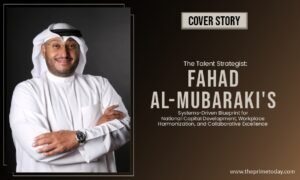
The most influential human resources leaders are those who cultivate the innovation capital of a nation. Fahad Al-Mubaraki, in that sense, by transforming traditional administrative workflows into modern talent ecosystems, shapes Kuwait’s human capital landscape. He aligns personnel management directly with national innovation goals, as the Head of Human Resources and Strategy at the Sabah Al-Ahmad Center for Giftedness and Creativity (SACGC), to foster internal excellence and collaboration. It requires a specialized internal workforce in managing an institution dedicated to identifying and nurturing the country’s brightest minds. Fahad Al-Mubaraki, by creating and implementing progressive human resources frameworks, addresses this need and enhances organizational effectiveness, and drives long-term business success. His over a decade of professional experience, with specialization in strategic talent management, structural design, and workforce development, enables him to build a high-performing workplace culture.
Fahad Al-Mubaraki transitions his department by modernizing human resources operations. Thus, a basic administrative office is turned into a core driver of corporate strategy. To attract specialized educators, researchers, and technical professionals to the center, he structures comprehensive recruitment, onboarding, and training programs. Ensuring every internal team possesses the exact skills and tools required to mentor Kuwait’s future innovators is his strategic method. He implements performance-driven tracking frameworks instead of relying on legacy employee management systems that measure mere attendance. That way, those framework rewards cross-functional collaboration and creative problem-solving. Creating an agile institutional environment where advanced ideas thrive, this shift turns everyday operational challenges into shared breakthroughs.
In an exclusive interview with The Prime Today, Fahad Al-Mubaraki spoke at length, giving deep insights into his most influential HR leadership journey.
At the Sabah Al-Ahmad Center for Giftedness and Creativity (SACGC), you hold a dual mandate covering both Human Resources and Strategy. In the landscape of 2026, how does this integration allow you to move beyond “personnel management” to ensure that the organization’s human capital is perfectly synchronized with its creative and national mission?
At SACGC, integrating HR and strategy extends our responsibilities beyond traditional personnel management. Since our mission centers on giftedness, innovation, and national capability development, we ensure human capital is directly aligned with our institutional strategy.
Our strategy is grounded in organizational excellence, which underpins all activities and initiatives. Excellence is not a separate program or metric; it is a mindset that guides our operations, collaboration, talent development, and impact.
This integration enables us to move beyond operational HR and focus on strengthening institutional capabilities, building agility, and fostering a culture where innovation and excellence reinforce each other.
It also changes our approach to talent. We are not just filling positions; we are building a sustainable ecosystem of competencies, leadership, collaboration, and shared purpose to support Kuwait’s future innovation landscape.
Ultimately, modern HR leadership should enable institutional impact. At SACGC, we position human capital not only as a support function but as a strategic driver of excellence, creativity, and national development.
Managing an organization dedicated to giftedness requires a unique internal culture. How do you design HR frameworks that identify and nurture high-potential talent within your own teams, ensuring that SACGC ‘practices what it preaches’ regarding innovation and excellence?
At SACGC, we foster a culture of curiosity, initiative, collaboration, and continuous growth. We encourage employees to share ideas, take ownership, and grow beyond their formal roles.
We support internal innovation through cross-functional collaboration groups and structured idea generation platforms. Bringing together employees from diverse backgrounds broadens perspectives and fosters creative problem-solving across the organization.
We emphasize employee development through ongoing education, professional certifications, and capability-building opportunities. Investing in our people is essential for sustained growth and long-term excellence.
I believe organizations that promote giftedness externally must also embody these values internally by maintaining a culture where innovation, learning, and excellence are consistently encouraged and practiced.
As AI and autonomous agents become part of the modern office, how are you leading the transition in Kuwait to ensure that technology enhances employee creativity rather than creating displacement? What is your personal philosophy on the ‘Human-AI’ partnership?
The conversation around AI should emphasize enablement, not replacement. When implemented thoughtfully, AI and autonomous technologies reduce repetitive tasks, allowing employees to focus on creativity, critical thinking, collaboration, and strategic contributions.
My approach positions technology as a tool to enhance, not compete with, human capability. AI delivers the most value when it improves decision-making, increases efficiency, and enables people to innovate and contribute meaningfully.
Organizations are responsible for preparing their workforce for this transition by promoting continuous learning, digital upskilling, and a culture of adaptability.
The future workplace will be defined not by “Human vs. AI,” but by how effectively organizations build strong Human – AI partnerships that enhance human potential.
Your work sits at the heart of Kuwait’s national goals for human development. How are you structurally aligning SACGC’s internal HR policies to support the broader national mandate of transitioning toward a knowledge-based economy?
Supporting a knowledge-based economy requires organizations to invest in infrastructure, technology, human capability, adaptability, and institutional learning.
At SACGC, we align our HR policies with national priorities by emphasizing capability development, continuous learning, innovation, and leadership readiness. We prioritize professional development, specialized certifications, and opportunities that enhance technical and strategic competencies.
We foster an environment that encourages knowledge sharing, collaboration, and continuous improvement, recognizing that sustainable development relies on institutions that adapt to evolving national and global demands.
I believe HR plays a critical role in supporting national transformation by helping organizations build future-ready talent and sustainable institutional capabilities.
The war for top-tier creative and technical talent is global. What specific ‘Future-Ready’ retention strategies have you implemented to ensure that Kuwait’s brightest minds remain engaged and motivated within local institutions?
Retention is no longer driven only by compensation or traditional incentives. High-potential talent now seeks purpose, growth, empowerment, and meaningful contribution.
At SACGC, we create an environment where employees connect with our mission and have ongoing opportunities for growth and innovation. We invest in development programs, certifications, cross-functional initiatives, and encourage employees to share ideas and drive institutional improvement.
We also recognize the importance of organizational culture. Talented. We recognize that organizational culture is critical. Talented individuals stay engaged when collaboration, trust, recognition, and professional growth are genuinely supported. Systems where people feel valued, challenged, and empowered to make an impact.
You have a strong focus on organizational excellence. What was the most critical ‘structural pivot’ you led to move the department away from person-dependent processes toward a system-dependent model that ensures consistency and scalability?
A key shift was moving from individual practices and informal knowledge to structured institutional systems and standardized processes.
This required stronger governance, documented procedures, improved performance measurement, and clearer operational frameworks to ensure consistency and accountability across the organization.
The goal extended beyond operational efficiency to institutional sustainability. Organizations are more resilient when knowledge, processes, and decision-making are embedded in systems rather than reliant on individuals.
I believe organizational excellence is more sustainable when institutions are built to operate consistently, adapt effectively, and progress regardless of leadership or personnel changes.
As an influential figure in the region, how are you currently mentoring the next generation of Kuwaiti HR professionals to think like “Business Strategists” rather than just administrative gatekeepers?
I believe modern HR professionals must recognize that their responsibilities go beyond administrative support. HR should play a direct role in organizational strategy, development, culture, and long-term sustainability.
When mentoring emerging professionals, I encourage them to focus on organizational impact rather than isolated HR tasks. They should understand operations, strategy, governance, change management, and how people decisions affect institutional performance.
I also stress the importance of continuous learning and adaptability, as the HR field is rapidly evolving with technology, workforce expectations, and organizational change.
The most effective HR leaders balance the human side of organizations with strategic thinking and an institutional perspective.
In a center focused on creativity, how do you foster a culture of ‘Collaborative Excellence’ where diverse viewpoints are not just tolerated but are utilized as a strategic asset for problem-solving?
Innovation flourishes when people feel comfortable sharing diverse perspectives and constructively challenging established ideas.
At SACGC, we promote cross-functional collaboration because diverse viewpoints lead to stronger ideas, balanced decisions, and creative solutions. We create opportunities for dialogue, participation, and shared problem-solving to strengthen our culture and support institutional learning.
Collaborative environments depend on mutual respect, trust, and alignment with a shared mission. Diversity of thought is most valuable when teams are united by common goals and purpose.
I believe organizations that embrace collaborative excellence are better positioned to adapt, innovate, and sustain long-term impact.
Innovation centers can be high-pressure environments. How do you integrate mental health and professional wellbeing into the core operational metrics of the center, ensuring that “excellence” does not come at the cost of burnout?
I believe sustainable excellence exists only in environments where people feel supported, engaged, and able to grow long-term. In high-performance organizations, maintaining balance is essential because continuous pressure without sustainability eventually harms creativity and institutional effectiveness.
At SACGC, we encourage a culture that values collaboration, professional development, open communication, and realistic operational expectations. We also recognize the importance of creating an environment where employees feel trusted, empowered, and connected to the organization’s mission.
For me, organizational excellence should be measured not only by performance outcomes but also by the organization’s ability to maintain a healthy, sustainable, and motivating work environment that allows people to keep contributing at their best.
Ultimately, if you had to define the ‘Gold Standard’ for a modern HR leader in the Middle East today, what qualities beyond technical competence do you believe are essential for driving true organizational impact?
While technical knowledge remains important, I recognize that effective HR leadership now requires a broader perspective. Today’s HR leaders must understand strategy, organizational culture, governance, transformation, and the changing relationship between people and technology.
I consider the ability to align human capital with institutional purpose to be among the most important qualities for HR leaders. Effective HR leadership extends beyond policy management by enabling organizations to achieve sustainable growth, adapt to change, and strengthen long-term capabilities.
In many ways, I believe HR is both an art and a science. It requires analytical thinking, structural rigor, and operational discipline, as well as emotional intelligence, human understanding, and the ability to navigate organizational and cultural dynamics effectively.
Adaptability, credibility, strategic thinking, and social and cultural awareness are also essential, especially in environments shaped by digital transformation and changing workforce expectations. Understanding people, values, and organizational behavior is critical for building trust, engagement, and sustainable workplace cultures.
Ultimately, I believe the most impactful HR leaders are those who balance operational excellence with human understanding and contribute meaningfully to organizational direction, institutional excellence, and long-term impact.