
Wael Maatouk: The Guest Has Changed. Has the Hotel?
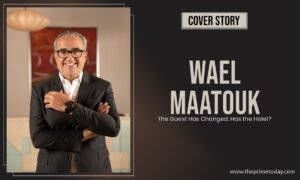
For Wael, the answer lies in more than rooms. It is found in people, dining, culture, community and the ability to evolve with the destination.
Anyone who has worked in hospitality knows how quickly things can change. A guest arrives with different expectations than they had a few years ago. A market shifts. A good employee needs a reason to stay. Competition becomes tougher. Suddenly, a business that seemed to be running well needs to find a new way forward, often while continuing to deliver the same level of service every single day.
This is where leadership starts to matter.
For Wael Maatouk, Area General Manager at Hilton Doha, understanding change has been a defining part of his journey through hospitality. The industry first attracted him because it brings together three things that rarely sit so closely together: commercial performance, human connection and cultural exchange. That combination has remained one of the most compelling parts of the profession throughout his career.
His experience across different markets and operating environments has added another layer to that understanding. No two destinations operate in the same way. Economic dynamics differ, consumer behaviour changes, talent landscapes take different shapes and every market brings its own competitive environment. Working through those differences has taught Maatouk the importance of adaptability.
At the same time, his experience has shown him that certain things remain constant. A business needs disciplined execution, a strong customer proposition, engaged teams and a clear strategic direction, wherever it operates.
Some of the lessons that have stayed with him most strongly came during periods when change could no longer be managed from the sidelines. He has worked through shifts in market conditions, repositioned businesses, developed talent and managed periods of significant transformation. Each experience brought a different challenge, yet each reinforced the same idea about leadership.
People need clarity when circumstances change. Businesses need momentum. And leaders need to think about where the organisation is going, rather than spending all their energy simply keeping up with where it is today. For Wael, that is what leadership in hospitality ultimately means: helping people understand the road ahead and making sure the organisation is ready to take it.
From Managing Performance to Forming It
Maatouk’s career progression has changed the scale at which he thinks about leadership. The responsibilities of a General Manager are closely tied to one property and its immediate priorities, while an area role requires a broader understanding of people, strategy and opportunities across several markets.
The evolution has been from managing performance to shaping the conditions in which performance can be consistently achieved across an organisation.
As a General Manager, the focus is naturally close to the property: the guest, the operation, the team and the commercial result. As responsibilities expand across multiple properties and markets, the perspective becomes broader. Maatouk is no longer simply responsible for delivering results; he is responsible for developing leaders, aligning businesses around strategic priorities and identifying opportunities across a portfolio.
At an area level, he places significant emphasis on empowerment and accountability. Strong organisations cannot depend on one individual making every decision. They require capable leaders who understand the strategy, have the authority to act and are accountable for the outcome.
His philosophy today is therefore centred on three principles: clarity of direction, disciplined execution and developing people capable of sustaining success beyond any individual leader.
That wider responsibility also affects how Maatouk approaches operational performance. A property cannot be judged through guest satisfaction or financial results alone. Both have to be understood alongside the market, the people running the operation and the factors that will determine whether the business remains strong over time.
Keeping Performance and Guest Experience Aligned
Managing performance across different properties requires an understanding of what makes each market unique. Maatouk therefore looks at the individual property’s position before deciding how its operating model, talent strategy and commercial approach should work together.
His responsibility is to ensure that operational excellence and commercial performance are viewed as mutually reinforcing priorities, rather than competing ones.
The starting point is a clear understanding of each property’s market position, customer segments, competitive environment and financial drivers. From there, the focus is on ensuring that the operating model, talent strategy and commercial approach are aligned with the opportunities in each market.
Guest satisfaction remains fundamental, because brand equity is ultimately built through the experiences consistently delivered. However, sustainable growth requires looking beyond immediate guest metrics and understanding the broader economics of the business, profitability, productivity, market share, demand generation, talent retention and long-term asset value.
At an area level, Maatouk’s role is also to identify where the business can leverage scale, share best practices and create efficiencies across the portfolio while preserving the individual character and positioning of each property.
The idea of preserving individual character becomes particularly relevant at Hilton Doha, where an established hotel is operating in a destination that has grown considerably in international visibility and hospitality competition.
Evolving Hilton Doha with Its Market
Hilton Doha has an established presence within the city, giving it a foundation from which to evolve. At the same time, a more sophisticated market means guests are comparing hotels through the complete experience they receive, from accommodation and dining to leisure and the way a property connects with its destination.
Hilton Doha occupies an important position within Doha’s hospitality landscape, with the advantage of an established presence combined with significant potential for evolution.
The differentiation is not based on one individual attribute. It is the combination of location, brand strength, people, F&B, leisure experiences and the ability to serve both international travellers and the local community.
The market is becoming increasingly sophisticated. Guests have greater choice and are comparing hotels not simply on room product, but on the total experience and the relevance of the proposition.
The objective is therefore to ensure that Hilton Doha continues to evolve with the market while retaining the strengths that have established its reputation. The property’s ongoing transformation provides an opportunity to strengthen its positioning, enhance the guest journey and ensure that the hotel remains competitive for the next phase of Doha’s tourism growth.
Maintaining that relevance in Qatar also requires an understanding of what makes the destination itself distinctive. For Maatouk, the relationship between an international brand and its local setting is an important part of delivering the right experience.
Bringing Global Standards into a Local Setting
Hilton operates with global standards, systems and expertise, while Qatar brings its own culture, heritage, hospitality traditions and developing tourism ecosystem. Maatouk believes the strongest hospitality experience emerges when those elements are understood together.
The strongest international brands are those that understand how to be globally consistent while remaining locally relevant.
Hilton provides a powerful global platform, with established standards, systems and expertise. Qatar provides an equally important local dimension through its culture, heritage, hospitality traditions and rapidly developing tourism ecosystem.
The balance comes from understanding which elements must remain consistent and where local relevance can enhance the experience. A generic international hotel experience cannot simply be replicated in every destination.
Instead, the strength of the global brand should be used to create an experience that feels appropriate to Qatar. Local culture should not be treated as an additional layer; it should inform how the hotel understands its guests, its colleagues and the destination in which it operates.
Knowing the destination provides one side of the equation. Understanding the people arriving at the hotel provides the other. Guest expectations are changing quickly, making it increasingly important for hospitality leaders to identify where those expectations are heading rather than simply measure where they have been.
Understanding What Guests Will Expect Next
Maatouk approaches guest insight through several sources, bringing together what guests say, what the market shows and what frontline colleagues experience every day. The combination gives the hotel a more complete picture of changing behaviour.
Understanding the customer has become increasingly data-driven, but data alone does not provide the complete picture.
At Hilton Doha, the team looks at a combination of guest feedback, market intelligence, commercial performance, digital behaviour, competitive benchmarking and, critically, the insights of frontline teams. The objective is to identify not only what guests are saying today, but where their expectations are heading.
Consumer behaviour is changing rapidly. Guests increasingly expect personalisation, convenience, authenticity and seamless digital experiences, but they also value genuine human interaction.
The strategic question is therefore not simply, “What do guests want?” It is, “What will guests expect next?” That distinction is important because leadership in hospitality requires anticipating demand rather than reacting to it.
That forward-looking approach extends into the hotel’s food and beverage strategy, where changing consumer behaviour has made restaurants, lounges and entertainment spaces increasingly important to a property’s identity.
Creating Food and Beverage Part of the Destination
Food and beverage can influence a hotel’s relationship with the local community as much as it influences the stay of an overnight guest. Hilton Doha has built a broad portfolio of concepts designed around different occasions, audiences and experiences, giving the property several ways to engage with the Doha market.
Food and Drinks is a strategic pillar of Hilton Doha’s positioning. In today’s hospitality landscape, F&D is no longer simply an ancillary revenue stream; it is a powerful driver of brand equity, commercial performance and destination relevance. A strong F&B portfolio gives a hotel the ability to engage with the local community, create multiple revenue channels and establish experiences that extend well beyond the traditional hotel stay.
One of Hilton Doha’s key competitive advantages is the breadth and diversity of its F&D and entertainment portfolio. The hotel has deliberately created a collection of concepts that serve different occasions, consumer segments and dayparts, while giving each outlet a distinct identity and proposition.
Trader Vic’s, with its distinctive Polynesian-French culinary heritage and internationally recognised concept, offers a differentiated destination experience. Tahitian Village complements this with a more relaxed, social and entertainment-led environment, particularly appealing to guests looking for a vibrant leisure experience.
The beachfront proposition is equally important. Bab Al Bahr combines Mediterranean cuisine with an experience that takes full advantage of the hotel’s location. Its private cabanas, which can accommodate groups of up to eight guests and feature air conditioning and television, address a very specific guest need: enjoying a beachfront dining experience while maintaining comfort and privacy. This is particularly relevant in Doha’s climate and demonstrates how experiences can be designed around the realities of the market rather than simply replicate conventional concepts. During the cooler months, the outdoor environment becomes an experience in itself, allowing guests to enjoy dining by the beach in a completely different setting.
Mawasem provides the consistency and versatility of an all-day dining destination, serving breakfast, lunch and dinner alongside a programme of themed dining experiences. Sushi On brings a more specialised Japanese-inspired proposition, while Ya Hala Lobby Lounge serves an important social function within the hotel, providing a sophisticated yet accessible setting for coffee, informal meetings and light dining.
Shots Bar represents another dimension of the strategy. With its strong sports positioning, it becomes particularly relevant during major football fixtures and international sporting events, creating a communal environment that attracts both hotel guests and the wider Doha market.
At the premium end of the entertainment spectrum, Society is an established nightlife destination in Doha and contributes another important dimension to the hotel’s overall lifestyle proposition.
The strategic value lies not simply in the number of outlets, but in the diversity and complementarity of the portfolio. Each concept has a defined role, target audience and occasion, allowing the hotel to capture demand across different dayparts and customer segments while strengthening the overall positioning of Hilton Doha.
From a leadership perspective, Maatouk believes the objective is to manage F&D as a portfolio rather than as a collection of individual outlets. Each concept is continuously evaluated through four lenses: brand relevance, guest experience, commercial performance and market differentiation.
The ambition is for Hilton Doha to be recognised as a destination with a compelling collection of culinary, leisure and entertainment experiences. When local residents choose to visit even when they are not staying overnight, that demonstrates the strength of the proposition and the role F&D can play in building a hotel’s relevance within its destination.
Ultimately, the F&D strategy is about creating distinctive reasons to visit, while ensuring that every concept contributes to the broader commercial and brand objectives of Hilton Doha. In a market as dynamic as Doha, differentiation, consistency and the ability to continuously evolve are what will sustain that relevance over the long term.
Strong concepts may bring guests and local residents through the doors, but the people delivering those experiences determine how the property is remembered. That makes talent development a central part of Maatouk’s approach to long-term performance.
Developing People Who Can Lead Tomorrow
Hilton Doha brings together colleagues from many nationalities, cultures and professional backgrounds. Maatouk sees that diversity as a source of strength and places emphasis on creating an environment where people can develop, take responsibility and build careers within the wider Hilton organisation.
Talent is one of the most important long-term competitive advantages in hospitality. Buildings can be renovated and concepts can evolve, but it is the quality, engagement and capability of people that ultimately define the guest experience and the long-term strength of the business.
At Hilton Doha, the hotel operates in one of the world’s most diverse hospitality environments, and this diversity is seen as a strategic strength. Colleagues represent a wide range of nationalities, cultures and professional backgrounds, bringing different perspectives and experiences to the organisation. The role of leaders is to ensure that this diversity translates into collaboration, innovation and stronger business performance.
The approach is closely aligned with Hilton’s global people strategy and its commitment to creating an inclusive environment where colleagues can build meaningful careers. Strong emphasis is placed on colleague engagement, recognition, wellbeing and development. Hilton’s benefits and colleague programmes are an important part of this proposition, because people perform at their best when they feel valued, supported and connected to the organisation.
Maatouk also strongly believes in developing talent from within. Whenever suitable opportunities arise, Hilton colleagues are encouraged to explore internal career opportunities and priority is given to internal talent. The strength of a global organisation such as Hilton is that a colleague’s career does not have to be limited to one property or one market. There are opportunities to progress across different hotels, brands, functions and countries. This creates a genuine career journey and allows the organisation to retain talented people while developing leaders who already understand Hilton’s culture and values.
Leadership development is therefore a fundamental part of the strategy. The organisation needs to identify potential early, provide colleagues with exposure to different areas of the business, give them meaningful responsibilities and support them through coaching and mentoring. The objective is not simply to fill the next management position; it is to build a sustainable leadership pipeline for the future.
Maatouk is equally committed to strengthening female leadership. Women play an important role across Hilton, and creating an environment where female colleagues have equal access to development and career progression is an important part of the approach. Encouraging more women to take on leadership positions strengthens the organisation by bringing broader perspectives and different experiences into decision-making.
Ultimately, high-performing teams require a balance of accountability and empowerment. People need clear expectations, but they also need to be trusted to lead, make decisions and take ownership. Recognition is equally important; colleagues want to know that their contribution is seen and valued.
At Hilton Doha, the ambition is to create an environment where people can see a long-term future for themselves. The organisation is developing the talent, diversity and leadership capability that will shape Hilton and the wider hospitality industry tomorrow.
A long-term approach to leadership also requires looking at how the business uses resources and contributes to the communities in which it operates. For Maatouk, sustainability belongs within the way a hotel is managed every day.
Making Sustainability Part of the Business
Environmental responsibility increasingly affects how hospitality businesses operate, from energy and water consumption to waste, events and resource efficiency. Maatouk’s approach places measurement alongside responsibility so that sustainability can influence practical business decisions.
Sustainability needs to move beyond individual initiatives and become embedded in the way hospitality businesses are managed and operated. At Hilton, this commitment is reflected through the broader ESG approach and, in particular, through Travel with Purpose, Hilton’s global strategy for advancing responsible travel and creating positive environmental and social impact.
At Hilton Doha, the hotel is committed to aligning its operations with these global priorities. Sustainability is considered through a broad lens, encompassing environmental responsibility, people and communities, and the way the business is governed and operated.
Technology and measurement are also critical. LightStay, Hilton’s proprietary ESG performance management platform, enables the hotel to measure and monitor key areas such as energy and water consumption, waste and carbon emissions. Having this level of visibility allows the hotel to move from intention to measurable action and identify where operational improvements can have the greatest impact.
Sustainability also extends beyond the physical operation of a hotel. Through Meet with Purpose, Hilton is helping redefine meetings and events by encouraging more sustainable and socially conscious experiences, from responsible food and beverage choices to waste reduction and activities that create a positive impact.
Ultimately, sustainability has to be both environmentally responsible and commercially sustainable. Improving resource efficiency, reducing waste and optimising consumption can create meaningful environmental benefits while also strengthening operational performance.
For Hilton Doha, the objective is therefore to continuously align with Hilton’s global ESG strategy while ensuring that sustainability is reflected in everyday decisions. It is viewed as an integral part of responsible leadership and the long-term resilience of the business.
The question of resilience becomes even more relevant as Qatar’s tourism sector enters a new phase. Greater international recognition brings opportunities for hotels, while a larger and more diverse visitor market also raises expectations across the industry.
Growing Alongside Qatar’s Tourism Ambition
Qatar has already demonstrated its ability to attract major international events and global business. Maatouk sees the next stage as an opportunity to deepen the country’s tourism proposition and encourage visitors to experience Qatar across leisure, culture, lifestyle and hospitality throughout the year.
Qatar is entering an important phase in the development of its tourism ecosystem. The country has already demonstrated its ability to host major international events, attract global business and establish itself as a destination with a strong identity.
The next opportunity is to build greater depth and diversity within the tourism offering and encourage visitors to see Qatar not only as an event or business destination, but as a year-round leisure, cultural and lifestyle destination.
For Hilton Doha, this creates opportunities across multiple segments, from international leisure and corporate travel to MICE, F&B and local experiences.
At a broader level, continued tourism growth will also strengthen the hospitality ecosystem, create employment opportunities and encourage further investment in the destination.
The opportunity for the industry is therefore significant, but it also raises the standard. As competition increases, hotels will need to become more differentiated, commercially sophisticated and responsive to the evolving expectations of international travellers.
A stronger market also means a faster-moving one. For hospitality leaders, the ability to remain steady while adapting to new conditions has become an essential part of the job.
Building Organisations Which Can Adapt
Changing traveller behaviour, technology, distribution models, talent pressures and economic conditions are creating a complicated operating environment for hospitality businesses. Maatouk sees organisational resilience as something that comes from strong foundations and a culture in which people are trusted to respond.
The greatest challenge is the pace of change.
Hospitality leaders today are managing a combination of evolving consumer behaviour, technological disruption, changing distribution models, talent challenges, economic volatility and increasing competitive intensity.
Resilience comes from maintaining strong fundamentals while remaining agile. Financial discipline, talent capability, operational efficiency and a differentiated customer proposition provide the foundation. Around that foundation, organisations need the ability to adapt quickly.
Maatouk also believes that leadership resilience begins with organisational culture. If people are empowered to identify problems, challenge established thinking and propose solutions, organisations become much more capable of responding to disruption.
The objective is not to predict every change. It is to build organisations that are capable of responding effectively when change inevitably occurs.
That ability to adapt will become increasingly important as technology changes the way guests interact with hotels. Looking towards 2030, Maatouk sees a hospitality industry where digital tools become more powerful while human connection gains greater value.
Technology Will Change Hospitality, Human Connection Will Remain
Artificial intelligence, data and connected technology are likely to influence everything from personalisation to operations by 2030. Maatouk’s vision gives these tools an important role while keeping the human element firmly at the centre of hospitality.
By 2030, hospitality will be more personalised, connected and intelligent, with artificial intelligence, data and technology playing an increasingly important role in anticipating guest needs, optimising operations and creating more seamless experiences. However, technology will never replace the human element of hospitality. As digital interaction becomes more prevalent, authentic service and meaningful human connection will become even more valuable.
This evolution aligns closely with Qatar National Vision 2030, particularly its ambitions for sustainable economic development, human capital and strengthening Qatar’s position as a globally recognised destination. For Hilton Doha, this represents both an opportunity and a responsibility to contribute to that national ambition while leveraging Hilton’s global expertise and capabilities.
There is significant potential in experiential travel, with guests increasingly seeking wellness, culinary discovery, culture, sustainability and authentic connections with the destination. Qatar is exceptionally well positioned for this evolution, given its heritage, infrastructure, international connectivity and growing tourism offering.
The role at Hilton Doha is to evolve with this transformation, embracing innovation while preserving the human connection at the heart of hospitality, developing its people and contributing to Qatar’s sustainable tourism growth.
Ultimately, the leaders of 2030 will be those who can successfully combine technology with human intelligence, global expertise with local relevance, and commercial growth with sustainable development. This is the direction in which Hilton Doha is taking the business and is fully aligned with Qatar National Vision 2030.
The future described by Maatouk is already influencing decisions at Hilton Doha. The property’s ongoing transformation gives that philosophy a physical form, with changes designed to prepare the hotel for the next stage of its story.
Preparing Hilton Doha for Its Next Chapter
The transformation covers guest rooms, public areas, meeting spaces and several facilities and experiences. A phased approach allows the hotel to continue serving guests while the work progresses, keeping the focus on strengthening the property for a changing market.
Hilton Doha is entering an exciting new chapter. The hotel is undertaking a significant transformation of the property, with a phased programme that will enhance its guest rooms, public areas, meeting spaces and several of its facilities and experiences.
The vision is not simply to renovate the hotel, but to elevate the overall experience and strengthen Hilton Doha’s position as one of the city’s leading hospitality destinations. Guests can expect refreshed spaces, enhanced experiences and a continued focus on the elements that have always been at the heart of the property: exceptional service, distinctive dining and a strong connection to Doha.
The hotel is taking a phased approach to ensure that it continues welcoming and serving its guests throughout the transformation. There is a great deal to look forward to, and Maatouk believes the result will be a Hilton Doha that feels both contemporary and distinctive, while building on the legacy established over the years.
In the end, the ambition is simple: to create a hotel that guests choose not only because of where it is, but because of how it makes them feel.