
A Strategic Visionary – Muayad Al Kabbani: Turning Technology Innovation into Regional Growth and Measurable Customer Value 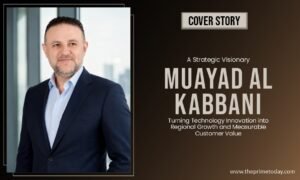
In this techno-charged era, it is amazing to see how the transition to live data processing platforms happens. It is powered by some of the most visionary directors of our time. In that league, emerging as a respected regional leader at the forefront by changing the way major enterprises interact with their operations by converting standard, stored information streams into immediate, profitable actions, is Muayad Al Kabbani, a Regional Director at Confluent. As such, he helps large organizations shift away from legacy batch processing to embrace real-time data streaming technologies. He brings twenty years of executive sales and business development experience to this enterprise market, utilizing a deep background in channel enablement and complex regional sales management.
Muayad Al Kabbani also assists global companies as they plan their digital transformation journeys, showing technical teams and executive boardrooms how to extract immediate business value from moving data. His highly proactive, pragmatic, and solution-focused workflow allows his division to resolve complex integration issues before they disrupt existing system infrastructures. This corporate emphasis on fast operational response helps major businesses capture revenue opportunities the exact moment they appear.
Throughout his professional history, Muayad Al Kabbani has successfully built new regional territories, appointed strategic reseller networks, and established reliable partner ecosystems across multiple emerging tech hubs. His career achievements include directing the largest informational technology transaction in the Middle East and Africa region, securing a one-hundred-and-twenty-one-million-dollar project named TAMKEEN for Saudi Airlines. By combining deep technical insights with a highly collaborative team approach, he breaks down the traditional barriers between multi-department tech platforms, allowing enterprise applications to share critical real-time alerts automatically across different corporate divisions.
The Multi-Decadal Journey through Regional Enterprise Technology
Over the two decades of experience in sales and business development, Muayad Al Kabbani’s journey has been shaped less by titles and more by the opportunities to build, transform, and lead in complex markets. Over more than two decades in enterprise technology, he has worked across the Middle East, with particular focus on Saudi Arabia, supporting government entities and enterprises through transformation. A pivotal shift in his career was moving from selling products to helping customers solve strategic business challenges. That required understanding executive priorities, partner ecosystems, and measurable outcomes. Another defining moment was learning to build teams and businesses, not only to close deals. Responsibility for people, pipeline, and strategy changes the definition of success: it becomes repeatable growth and developing others. His progression into regional leadership came from combining customer credibility, disciplined execution, and a strong belief that sustainable growth is achieved when customer value, partner alignment, and team culture work together. This mindset has allowed him to lead through different market conditions, technology shifts, and customer priorities while remaining focused on outcomes.
The Multi-Stage Evolution of Enterprise Leadership Across Strategic Platforms
Each stage of Muayad Al Kabbani’s career added a different dimension to his leadership approach. At BMC Software, he developed an appreciation for enterprise-scale environments and mission-critical outcomes. Working with complex organizations reinforced the importance of understanding operational priorities and aligning technology to business impact. At Sprinklr, he supported organizations transforming customer experience and service, reinforcing the importance of executive relationships and breaking down silos. Customer experience transformation taught him that technology becomes meaningful only when it improves engagement, service quality, and measurable customer outcomes. His recent experience at Confluent added another strategic layer: the central role of real-time data in enabling modern applications, analytics, and AI. Together, these experiences taught him that every technology conversation must connect to business value. Technology may evolve rapidly, but the fundamentals of leadership remain constant: credibility, relevance, execution, and customer trust.
Cultivating Trust and Aligning the Partner Ecosystem for Shared Victory
Trust is the foundation of every strong business relationship, says Muayad Al Kabbani. With enterprise clients, trust is built by understanding their priorities, being transparent, delivering on commitments, and remaining engaged beyond the transaction, he adds. Customers remember leaders who stand with them through challenges. Partners and resellers are equally important, especially in markets where local relationships, procurement frameworks, and delivery capabilities shape success. He treats partners as an extension of the business strategy. That means early alignment, clear customer value, enablement, and honest communication. Strong partnerships are not created through occasional meetings; they are built through shared opportunities, shared accountability, and mutual respect. When vendors, partners, and customers are aligned around outcomes, they can navigate complexity faster and deliver greater impact. His experience has shown him that the strongest growth engines are created when the entire ecosystem wins together.
Purposeful Innovation and the Commercial Realities of Advanced Tech
Also, innovation is central to Muayad Al Kabbani’s sales strategy, but it must be purposeful, he feels. Customers are not looking for innovation simply because it is new. ‘They are looking for innovation that addresses a priority, accelerates an outcome, or creates competitive advantage,’ he adds. A sales leader must help customers see what is possible while grounding AI, automation, and real-time data in readiness, governance, and business cases. This is especially important today, when every enterprise is evaluating how new technologies can improve efficiency, decision-making, and customer experiences. Innovation also applies to segmentation, executive engagement, partner activation, and coaching. Winning organizations are not only those with the most innovative products; they are the ones that convert innovation into customer trust, measurable value, and repeatable growth. The responsibility of a sales leader is to bridge the gap between technology potential and business reality.
The Three Foundational Leadership Principles of Confluent Regional Growth
Furthermore, Muayad Al Kabbani’s leadership philosophy is built on three principles: clarity, discipline, and customer value. Clarity, to him, means the team understands where they want to win, why the customer should act, and what each person owns. Discipline means rigorous execution: strong pipeline generation, accurate forecasting, clear deal strategies, executive alignment, and consistent follow-through. Customer value means every engagement must begin with business outcomes, not technology features.
At Confluent, this philosophy aligned naturally with helping enterprises understand the business value of real-time data. Regional growth cannot be sustained through transactional selling. It requires trusted advisory relationships, strong partners, and a team capable of translating innovation into measurable impact. He believes in raising standards while coaching people to reach them. The goal is not only to deliver numbers; it is to build a team and market presence that can produce results year after year.
Navigating Diverse Middle Eastern Markets with Operational Rigor
Having worked across the Middle East, Muayad Al Kabbani needed to navigate diverse market dynamics while maintaining consistent performance outcomes. The Middle East is dynamic, he observes, but not one uniform market. Each country has distinct transformation priorities, regulations, procurement practices, and partner dynamics. Saudi Arabia, for example, strongly emphasizes measurable national and citizen outcomes. His approach is to stay locally relevant while remaining operationally consistent. Market strategy must reflect who influences decisions, what outcomes matter, and which partners are trusted. However, the operating rhythm behind execution should remain disciplined across markets: account planning, pipeline inspection, executive engagement, forecast accuracy, and value-based qualification. In simple terms, he adapts the customer conversation, but he does not compromise on execution standards. This balance allows a leader to respect market diversity while building predictable regional growth. Successful regional leadership requires both cultural understanding and operational rigor; neither can succeed for long without the other.
Overcoming Complex Barriers in Enterprise Digital Transformation
According to Muayad Al Kabbani, there are some significant challenges enterprises face today in their digital transformation journeys, and he helps them overcome these. Many organizations have invested in technology, yet still struggle to turn that investment into a measurable impact. Data remains fragmented, systems are siloed, and transformation priorities are overwhelming. Moving AI from experimentation to scale is another challenge: outcomes depend on trusted, timely, and governed data. His role is to help customers simplify the conversation around transformation. He and his teams begin with business priorities: reducing risk, improving service, increasing efficiency, enabling growth, or delivering better experiences. They then connect the technology roadmap to measurable outcomes, executive sponsorship, and practical execution. Strong transformation is not about purchasing the latest platform. It is about aligning people, process, data, and technology around a clear outcome, then ensuring the customer continues to realize value throughout the journey. Technology providers must earn the right to become strategic partners by helping customers convert ambition into execution.
Transforming Enterprise Decision-Making Through Real-Time Actionable Data
Moreover, Muayad Al Kabbani’s work emphasizes turning real-time data into actionable business value. This has been transforming enterprise decision-making in today’s landscape. Historically, many organizations made decisions using information that was collected, processed, and analyzed after the event. Today, that is no longer enough. Customer expectations, operational risks, fraud patterns, supply-chain movements, and digital interactions all change in real time. Enterprises need the ability to respond while events are happening, not after opportunities or risks have passed. Real-time data transforms decision-making by enabling businesses to move from reactive reporting to proactive action. A bank can identify risk faster, a government entity can improve citizen services, and an enterprise can power AI with fresher, more contextual data. The real value is not simply speed. It is relevance, trust, and the ability to act confidently. Data must be connected, governed, and usable across the organization. When enterprises achieve this, technology becomes more than infrastructure; it becomes a strategic capability that improves customer outcomes, operational efficiency, and innovation.
The Blueprint for Assembling and Cultivating High-Performing Sales Teams
A loyal and evolving workforce remains the foundation of every successful organization. And Muayad Al Kabbani has successfully built and scaled such reliable regional sales teams. When developing high-performing teams, there are some unique traits he looks for: ambition, curiosity, accountability, and the ability to earn trust. Enterprise sales professionals must be hunters, but hunting alone is not enough. They need to understand customers’ businesses, engage senior stakeholders, work effectively with partners, and stay disciplined throughout long and complex sales cycles. He strongly values coachability. Talent matters, but the willingness to learn, accept feedback, and improve consistently is what separates good performers from future leaders, he adds and looks for people who contribute beyond their own number through collaboration and shared responsibility. As a leader, he creates an environment where expectations are clear, progress is measured, and success is recognized. He believes in strong operating cadence, pipeline rigor, and honest conversations. The best teams do not avoid accountability, he says. They embrace it because they understand it is the foundation for winning consistently.
Strategic Disciplines and Principles for Aspiring Global Sales Leaders
Further, Muayad Al Kabbani’s advice to aspiring sales leaders who aim to build a successful career in global markets is simple: First, learn to sell value, not products. Technology will continue to change, but the ability to understand a customer’s business challenge and connect it to an outcome will remain essential. Second, develop discipline early. Build strong habits around preparation, account planning, qualification, forecasting, and follow-through. Leadership opportunities often come to people who demonstrate reliability before they receive a leadership title. Third, invest in relationships and reputation; in global markets, credibility travels. How he or an executive behaves during challenges will define your professional reputation far more than how you behave during success. Finally, remain humble and curious. Every country, industry, customer, and team member can teach you something. The strongest leaders are confident in their direction, but open enough to keep learning and adapting. A successful international career is built through performance, integrity, and the ability to understand different perspectives, he states.
Continuous Learning Frameworks and Strategic Refinement
To stay ahead of industry changes and continuously evolve his leadership and business strategies, Muayad Al Kabbani stays close to three sources of insight: customers, technology developments, and his teams. Customers provide the clearest signal of where priorities are shifting, whether that is AI adoption, real-time decision-making, customer experience transformation, efficiency, or governance. Technology ecosystems show what is becoming possible. Teams and partners show where his and his team’s approach must evolve. He also believes strongly in continuous reflection. After wins and losses, leaders must ask what to repeat and what to change. A strategy is only valuable if it evolves with the market.
Most importantly, he does not separate learning from execution. New insight must translate into stronger customer conversations, sharper account priorities, better coaching, and more relevant value propositions. Staying ahead is not about following every trend; it is about identifying the changes that matter and acting on them with discipline, he shares.
The Intelligent and Connected Regional Ecosystems of Tomorrow
Finally, looking ahead, Muayad Al Kabbani sees that the future of enterprise technology will be defined by intelligent, connected, and real-time organizations. ‘AI will continue to accelerate transformation, but its impact will depend on whether businesses can deliver trusted, contextual, and timely data to support decisions and actions. Organizations that remain dependent on fragmented systems and delayed information will struggle to meet the expectations of customers, citizens, and employees.’
Across the Middle East, he sees significant opportunity to build technology ecosystems delivering economic and societal outcomes. The future, he adds, will belong to enterprises that combine innovation with execution: modernizing data foundations, improving experiences, automating intelligently, and building trust into every interaction. His role is to continue helping organizations and teams navigate that journey: translating complex technology into business value, developing high-performing people, strengthening partner ecosystems, and building sustainable regional growth. “Ultimately, I want to contribute to a future where technology is not measured by what it promises, but by the positive outcomes it delivers,” he concludes.