
When a Simple Restaurant Task Taught Nathaniel Robinson What Leadership Really Means
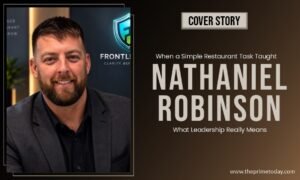
How Nathaniel helps restaurant teams understand their work, take greater ownership, and build better ways of operating.
What happens when someone returns to work after a life-changing setback and finds that the job waiting for them changes the way they see leadership?
For Nathaniel Robinson, that answer came in 2015, after a car accident brought him back to restaurant management and into a Subway franchise group where the owners would teach him lessons that stayed with him long after the shift ended.
Nathaniel had already managed restaurants for several years, so he knew the pressure of keeping an operation running. What these owners gave him was something different: real ownership and investment in his development. They did more than teach him how to manage the work. They showed him how to help people understand the work.
A simple task such as portion control became an example. It could easily be treated as another rule employees had to follow, yet the owners taught Nathaniel to explain what sat behind it. Portion control affected food cost, which affected labor hours, raises, promotions, and ultimately the entire team.
That way of thinking began to change Nathaniel’s understanding of leadership. When people understand how their work connects to the wider operation, they can make better decisions and take greater responsibility for what happens around them.
The experience also taught him that leadership requires both empathy and accountability. Difficult conversations can be uncomfortable, but sometimes they are necessary for the health of the broader operation. Learning how to have those conversations with people in mind became part of what Nathaniel carried forward.
Looking back, he now sees that period as an early foundation for the leadership philosophy he would eventually develop around inspiring people, investing in their understanding, and creating better ways to operate.
For Nathaniel, one of the most important lessons in leadership began with something remarkably ordinary: helping someone understand why a simple task mattered.
From People Problems to System Problems
Managing operations across multiple locations often reveals a distinction that is easy to miss: when the same issue appears repeatedly, the cause may sit deeper than individual performance.
Nathaniel’s perspective changed when he moved into a newly created executive role overseeing food and beverage operations across 28 locations.
The organization was still developing how it approached food operations, and because the role itself was new, there wasn’t an established system for him to inherit. As he continued operating existing locations while opening new ones, he had to think differently about creating consistency across the organization.
Health and food safety provided one of the clearest examples. There were no standardized temperature logs, waste logs, or consistent processes for ensuring every location operated to the same expectations and met state and local health requirements.
That forced him to stop looking at every issue as an individual performance problem.
If 28 locations aren’t given the same process, expectations, or way to track execution, you can’t automatically blame the person at the location when something gets missed. Sometimes the system itself has a gap.
So Nathaniel started with the fundamentals and built those systems across the locations. What he is proud of is that many of those processes continued after he left and evolved over time.
The experience changed how he looks at operations: accountability matters, but so does giving people the clarity, structure, and tools they need to succeed.
Clarity Before Scale
Growth can expose weaknesses that remain hidden when an organization is smaller. Before a business adds locations, people, or complexity, leaders need to understand whether the operating model can carry that weight.
Clarity Before Scale™ wasn’t originally created as a marketing slogan. It was Nathaniel’s attempt to give language to a pattern he had observed throughout his career.
One experience stayed with him from his time in wireless retail. His company acquired another organization and almost overnight became one of the largest operators in the nation, with more than 2,000 locations.
From the outside, it looked like tremendous growth.
Over the following months, however, he watched that footprint begin to shrink. Stores closed, and the organization eventually stabilized at a much smaller size. He wasn’t part of the executive team making those decisions, so he can’t speak to every reason behind them. But the experience left him asking an important question: Does getting bigger automatically mean you are getting stronger?
Years later, as he began building FrontlineQSR, he realized the answer was no.
To Nathaniel, Clarity Before Scale means understanding your operation before expanding it. It means knowing what good execution looks like, establishing non-negotiable standards, recognizing operational patterns, and ensuring leaders have visibility into what is actually happening before making decisions about the future.
Scale amplifies whatever already exists. If the operation is healthy, scale can accelerate growth. If execution is inconsistent, scale magnifies the problems.
That’s why Nathaniel believes clarity isn’t something you pursue after growth. It’s what makes sustainable growth possible in the first place.
Closing the Execution Gap
Leadership teams often see performance through reports and financial measures, while frontline teams experience the business through daily decisions, routines, and behaviors.
Nathaniel believes one of the biggest gaps in operations comes from the distance between those two perspectives.
An executive may look at an end-of-month report and see two stores. One is a high-volume location that appears successful from the top of the P&L, while another has lower sales but stronger operational discipline.
The financial statements show where the business finished, but they rarely explain how it got there.
Two locations can produce similar financial results for very different operational reasons. One may benefit from strong execution, while another may be compensating for staffing issues, waste, inconsistent training, or weak processes through higher sales.
Nathaniel believes leaders need to look beyond the result and understand the behaviors and decisions that produced it. Closing the execution gap starts with giving leadership a clearer view of what is happening between the frontline and the financial report.
The Problem Behind the Numbers
Nathaniel didn’t arrive at that perspective through theory. He learned it by making many of the same decisions operators make when a number moves in the wrong direction.
Throughout much of his career, the conversations were consistent. Every Monday, teams reviewed the previous week’s numbers: sales, transactions, food cost, and labor.
If food cost was high, the answer was to get it under control. If labor was high, the answer was to cut hours.
Early in his career, Nathaniel responded the way many managers do. He cut labor, reduced product orders, and looked for quick ways to improve the next report.
Sometimes those decisions worked temporarily. A week or two later, the same problems would often return.
That experience forced him to change the question.
Instead of asking only how to improve the next report, he began asking what had created the result in the first place.
Was the issue staffing? Training? Ordering? Waste? Execution?
The shift was simple but important. He stopped treating the financial result as the problem itself and started treating it as a signal that something in the operation deserved closer attention.
The more locations he managed, the more obvious it became that recurring results usually had recurring causes.
From Reporting to Execution Governance
For most of his career, the systems Nathaniel worked with did what they were designed to do: collect information and report results.
The challenge was that the information was often fragmented across reports, conversations, observations, and operational systems.
As an operator, Nathaniel spent countless hours connecting those pieces. If labor was high, he needed to understand what was driving it. If food cost was climbing, he needed to determine whether the issue involved ordering, waste, training, or execution.
By the time he had enough information to identify a pattern, the operation had already moved forward. The behavior had continued across multiple shifts, and the financial impact had begun to accumulate.
That experience helped shape FrontlineQSR.
Rather than building another platform focused primarily on reporting what had already happened, Nathaniel wanted to help leaders connect operational signals and recognize meaningful patterns sooner.
That’s what he means by execution governance.
The goal is not to replace an operator’s judgment or make decisions for them. It is to shorten the distance between seeing a signal, understanding what may be behind it, and deciding where leadership attention is needed.
Reporting shows the score. Execution governance helps leaders understand the activity producing it while there is still time to influence the outcome.
Recognizing Early Operational Drift
Labor is one practical example.
Nathaniel has seen labor targets in many restaurant operations sit around 30% of sales. But the percentage alone doesn’t tell the full story. A significant portion of labor may already be committed to salaried managers and fixed scheduling requirements, leaving managers with a relatively small portion of the budget they can actively adjust.
That can make labor the quickest lever to pull when performance needs to improve. Hours get reduced, schedules become tighter, and shifts run with fewer people.
The immediate number may improve, but the underlying operation may not.
Nathaniel learned to look at what was happening behind the percentage.
Is an evening shift consistently understaffed because schedules aren’t aligned with actual demand? Is one shift carrying more of the workload than another? Are managers repeatedly making reactive scheduling decisions instead of responding to patterns they can identify and plan around?
The same principle applies to turnover, training consistency, remakes, ordering habits, and waste. Individually, they may appear minor. Together, they can reveal that an operation is beginning to drift before the issue becomes obvious in a monthly profit-and-loss statement.
For Nathaniel, the objective is to understand whether the operation is staffed and managed in a way that protects execution and long-term profitability.
From Operator to Founder
Years spent inside operations gave Nathaniel a close view of recurring challenges across different roles, industries, and locations. Eventually, the question became whether those lessons could be applied at a much broader level.
What led him from operations into building FrontlineQSR wasn’t that he wanted to leave operations. It was that he wanted to expand his impact.
Whether he was leading a Subway franchise, working in wireless retail, or overseeing food and beverage operations across multiple locations, one thing remained constant: he enjoyed helping people succeed.
He found purpose in investing in leaders, inspiring teams to think differently, and building systems that made their jobs easier. Long before he formalized it into his 3-I Leadership Framework, Inspire, Invest, Innovate, that philosophy was already guiding how he led.
For years, he believed the next step would be becoming a restaurant consultant. He wanted to help organizations improve operations one company at a time.
But as he reflected on the problems he had encountered, he kept seeing the same challenges everywhere.
Different brands.
Different markets.
Different leadership teams.
Yet the underlying patterns were remarkably similar. Leaders weren’t failing because they lacked effort or data. They were struggling to see the operational behaviors quietly shaping their results every day.
That realization changed the question.
Instead of helping one organization at a time, Nathaniel began asking: What if they could build a system that helped every organization see those patterns sooner?
That question eventually became FrontlineQSR.
His goal has never been to replace great leaders. It is to give operators, district managers, and executives the clarity needed to understand what is happening inside their business before small operational misses become expensive outcomes.
What started as a desire to become a consultant ultimately evolved into building a platform, one he hopes can scale the lessons he has learned throughout his career and help organizations create stronger operations and better leaders.
Turning Data into Action
Having more operational information is only useful if leaders can turn it into better decisions.
Nathaniel believes that starts with changing how leaders respond to a variance. Instead of immediately asking how to move a number back into range, they should use the result as a starting point for investigation.
A labor variance might lead to a scheduling question. A food cost variance might point toward ordering or waste. A service issue might reveal a training or staffing pattern.
The answer isn’t always obvious, which is why context matters.
Effective operational intelligence should help leaders focus their attention on the issues most likely to influence performance. It should reduce the time spent searching through disconnected information and give leaders more time to coach teams, address recurring patterns, and make informed decisions.
That is what Nathaniel wants FrontlineQSR to enable: not more reporting for the sake of reporting, but a clearer path from information to action.
The technology can surface patterns. Leaders still provide the judgment, context, and human understanding required to decide what should happen next.
Better data doesn’t replace leadership. It gives leadership a stronger foundation on which to act.
Consistency Without Conformity
Multi-unit operations need shared standards to protect quality and performance, yet every location also has its own leaders, people, customers, and circumstances.
Nathaniel believes consistency begins with clearly defined non-negotiables. Every organization should establish the standards that cannot be compromised, whether that’s food safety, guest experience, ethics, operational discipline, or brand expectations.
The mistake is trying to standardize everything.
When leaders attempt to manage every decision across twenty locations, they can unintentionally remove the ownership that makes great leaders successful.
If you are responsible for twenty restaurants, you are also responsible for twenty different leadership personalities. Those individuals were placed in leadership because they bring unique strengths, experiences, and relationships with their teams.
Trying to make every manager lead exactly the same way can weaken the culture you are trying to create.
Instead, Nathaniel believes organizations should establish clear non-negotiables while giving local leaders freedom within those boundaries. Let them determine how they recognize people, coach teams, solve local challenges, and create an environment where employees want to succeed.
When leaders can shape their team’s culture while remaining accountable to shared standards, they become more invested in the outcome.
To Nathaniel, that’s how you create consistency without conformity: standardize expectations and accountability, but empower people to lead authentically.
Inspire, Invest, Innovate
The foundation of Nathaniel’s 3-I Leadership Framework began with a question he asked every candidate he interviewed: “If you had to describe yourself in three words, what would they be?”
He wasn’t looking for a particular answer. He genuinely wanted to understand who people were beyond their résumés.
Then one day, a candidate turned the question back on him.
“What three words would you use to describe your leadership style?”
He answered, but afterward realized he didn’t truly have a framework that defined how he wanted to lead.
The question stayed with him.
Nearly four years later, after leading teams across multiple industries and reflecting on the leaders who had influenced him, he found the three words that consistently described the leader he wanted to be: Inspire. Invest. Innovate.
Inspire means helping people believe they are capable of more than they currently see in themselves and encouraging them to pursue their own version of success.
Invest means taking the time to develop people rather than simply managing them. The greatest investment any leader can make is in another person’s growth.
Innovate means recognizing that people don’t all learn, communicate, or solve problems the same way. Leadership isn’t one-size-fits-all.
He remembers one employee who struggled to understand the importance of speed of service. Explaining the process repeatedly wasn’t helping. Instead, Nathaniel handed them his iPad and had them spend time playing Diner Dash.
The exercise helped them visualize prioritization, timing, and customer flow in a way traditional coaching hadn’t. They immediately began connecting those concepts back to their work in the restaurant.
The experience reinforced something he has carried with him ever since: great leadership isn’t about finding one method that works for everyone. It’s about understanding people well enough to teach in the way they learn best.
That’s what the 3-I Framework has become for him, not a management model, but a commitment to helping people become more capable, confident, and successful than when they first met.
Building FrontlineQSR with Discipline
Founding a company while continuing a full-time career creates a different kind of leadership challenge. The founder has to hold onto a long-term ambition while doing the slower, less visible work required to earn trust and validate an idea.
When Nathaniel started FrontlineQSR, he believed he would have revenue within months and eventually be able to leave his traditional 9-to-5 to focus on the company full-time.
Like many founders, he quickly learned that building a meaningful business takes longer than building an idea.
Today, he still works full-time while investing mornings, evenings, and weekends into FrontlineQSR, refining the product, building relationships, writing thought leadership, meeting with partners, and validating the platform with industry leaders.
The timeline has changed. The vision hasn’t.
Ironically, the same philosophy he built into FrontlineQSR has become the philosophy he uses to build the company itself.
Clarity Before Scale™ isn’t just something he believes organizations should practice; it’s how he makes decisions as a founder.
It would be easy to rush features, chase every opportunity, or prioritize rapid growth over long-term trust. Instead, he measures major decisions against one question:
Does this move us closer to delivering on the promise we have made to restaurant leaders?
Building a company has taught him that vision matters, but disciplined execution is what ultimately earns trust.
Lessons From Building the System
Moving from operating businesses to designing a platform requires a different form of leadership. The work becomes less about directly changing an outcome and more about explaining a vision, earning belief, and building the foundation around it.
One of Nathaniel’s biggest challenges has been learning how to communicate the vision behind FrontlineQSR.
As an operator, you can walk into a restaurant, coach a manager, adjust a process, and often see the impact quickly. Building a company is different. You have to help other people believe in a vision that may exist only in your mind before it becomes reality.
He has had to learn not only how to explain what FrontlineQSR does, but why it exists and what problem it is trying to solve.
At the same time, he has been building much more than a product: a company, personal brand, industry relationships, partnerships, and credibility, all while continuing to work full-time.
Perhaps the most important lesson has been learning to balance ambition with discipline.
Nathaniel has always believed FrontlineQSR has the potential to become something significant, but he has also learned that vision alone isn’t enough. Each stage has reinforced the importance of validating ideas, earning trust, and building a strong foundation before trying to scale.
Looking back, he realizes he hasn’t just been building FrontlineQSR. FrontlineQSR has also been shaping him into a better founder.
Redefining Multi-Unit Operations
The broader ambition for FrontlineQSR reaches beyond restaurant technology.
Restaurants are where the company is starting because Nathaniel believes they are one of the most operationally demanding industries in the world.
With Phase 2 of product development now complete, FrontlineQSR is entering the next stage of validating its product, customer outcomes, and broader model through real-world use and commercial engagement. If that validation continues to demonstrate the potential Nathaniel sees, he believes the underlying principles may eventually apply to other operationally complex industries.
But expansion isn’t the goal. Impact is.
Nathaniel hopes FrontlineQSR can help organizations understand the operational behaviors that shape performance before those issues become costly.
If they accomplish that, leaders can spend less time reacting to reports and more time developing people. Managers can have greater confidence because they have more context around what is happening and are better equipped to investigate why.
Organizations can grow knowing they have the operational clarity to support that growth rather than simply hoping scale solves existing problems.
In many ways, there is something meaningful about where this journey began.
Nathaniel started his career flipping burgers in a quick-service restaurant. Today, he is building a company whose first mission is to help the very industry that taught him how to lead.
There’s a certain irony in that, but also a deep sense of purpose. His hope is that years from now FrontlineQSR won’t simply be known as another restaurant technology company. He hopes it will be remembered as a company that helped leaders see their operations more clearly, build stronger teams, and create a foundation for confident growth.
If that happens, he believes the technology will have done exactly what it was meant to do:
not replace leadership, but strengthen it.