
Earth Shot on iPhone 17 Pro Max Redefines Space Photography Forever
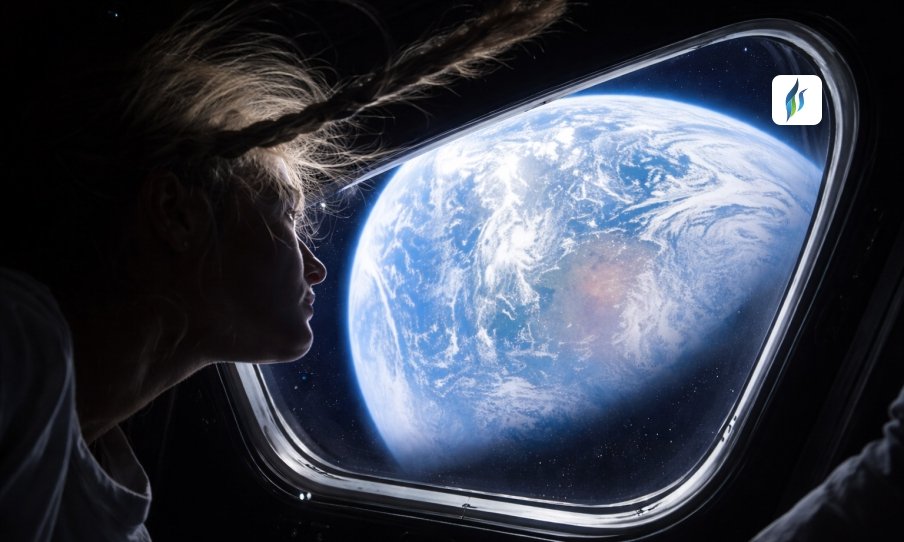
In 2026, those words – “Earth Shot on iPhone 17 Pro Max” – shifted into something different, almost without warning. A regular phone, built for streets and cities, ended up snapping photos of Earth while floating far beyond orbit. Instead of labs or astronauts, it was a handheld gadget doing the work, lenses pointed back at home from deep space. Because of this, what we see feels familiar yet strange: a view shaped by tools usually held during coffee runs or commutes. Distance changed nothing about the device’s core design, yet everything about its purpose. From that far out, even ordinary tech can carry weight. The screen still glows like any other evening here. Yet behind it lies a trail of signals crossing vast silence.
This moment wasn’t born from ads or slogans – purpose drove it forward. Looping the Moon on Artemis II, crew members had phones tucked inside their gear, showing how daily tech now rides along in big missions. With NASA’s go-ahead, those handhelds turned into journals, capturing moments only humans can record. What unfolded? A quiet leap, felt more than seen.
A Historic First Beyond Earths Atmosphere
History now includes Artemis II, yet a standout detail hides in plain sight – smartphones flying beyond low orbit. Inside Orion, crew members pointed personal devices toward window glass, snapping raw glimpses of Earth below. Not lab conditions, not scripts – just people recording what caught their eyes mid-flight. Each photo, unplanned and unfiltered, held a quiet weight: a world seen from far away.
A fresh detail catches attention – this is the very first shot of Earth from orbit taken by a regular phone. As the planet slips away behind them, crew members look on, framed in quiet awe by their own handheld lens. Instead of complex gear, they reach for something familiar, slipping it from a pocket like any other day. That ordinary click ties us closer, making vast distances feel personal again.
Around the next phase of moon missions, Artemis II marks progress for later landings. Even though high-end gear such as Nikon and GoPro traveled too, phones joining them signal a move closer to everyday experience in sharing space moments.
Technology That Survived Space Conditions
Space is one of the harshest environments imaginable, with extreme temperatures, radiation, and zero gravity. For a smartphone to function in such conditions, it must undergo rigorous testing and qualification. Before the mission, the devices were approved for use in orbit, ensuring they could withstand the demands of deep space travel.
The camera system played a crucial role in this achievement. The device’s front camera, equipped with an advanced sensor and autofocus, was used to capture some of the most iconic shots from the mission. The ability to frame images flexibly, even in microgravity, allowed astronauts to experiment with angles and perspectives rarely seen before.
Interestingly, the images were later refined using software tools like Adobe Lightroom, showing that even in space, post-processing remains an essential part of photography. This blend of raw capture and digital enhancement highlights how modern photography is as much about software as it is about hardware.
A New Era of Humanized Space Exploration
What makes this moment truly special is its emotional resonance. The images captured during the mission are not just technical achievements—they are deeply human. One astronaut described the view simply as indescribable, emphasizing the emotional weight of seeing Earth from such a distance.
This is where the idea of Earth Shot on iPhone 17 Pro Max becomes more than just a headline. It becomes a symbol of how far technology has come and how it continues to bridge the gap between ordinary life and extraordinary experiences. The same device used for selfies, social media, and daily communication is now part of humanity’s journey into deep space.
The photographs themselves echo historic images like the “Earthrise” from the Apollo era, but with a modern twist. They show Earth as a glowing blue sphere, sometimes partially in shadow, sometimes illuminated by sunlight, reminding us of both its fragility and beauty.
When Everyday Devices Tell Extraordinary Stories
The broader implication of this milestone is profound. By allowing astronauts to carry personal devices, space missions are becoming more relatable and immersive. Instead of relying solely on official footage, we now get glimpses of space through the eyes—and lenses—of individuals experiencing it firsthand.
This shift opens up new possibilities for storytelling, education, and public engagement. Imagine future missions where astronauts document their journeys in real time using familiar tools, bringing space exploration closer to people on Earth. The democratization of technology is no longer limited to our planet—it has extended into space.
Earth Shot on iPhone 17 Pro Max is not just about a photograph; it is about perspective. It reminds us that innovation doesn’t always come from building something entirely new, but sometimes from taking what we already have and pushing it beyond its limits.
Read Also : Strategic Importance and Global Tensions Surrounding the Strait of Hormuz Today